
What an Electric Motor Really Costs for Each Horsepower
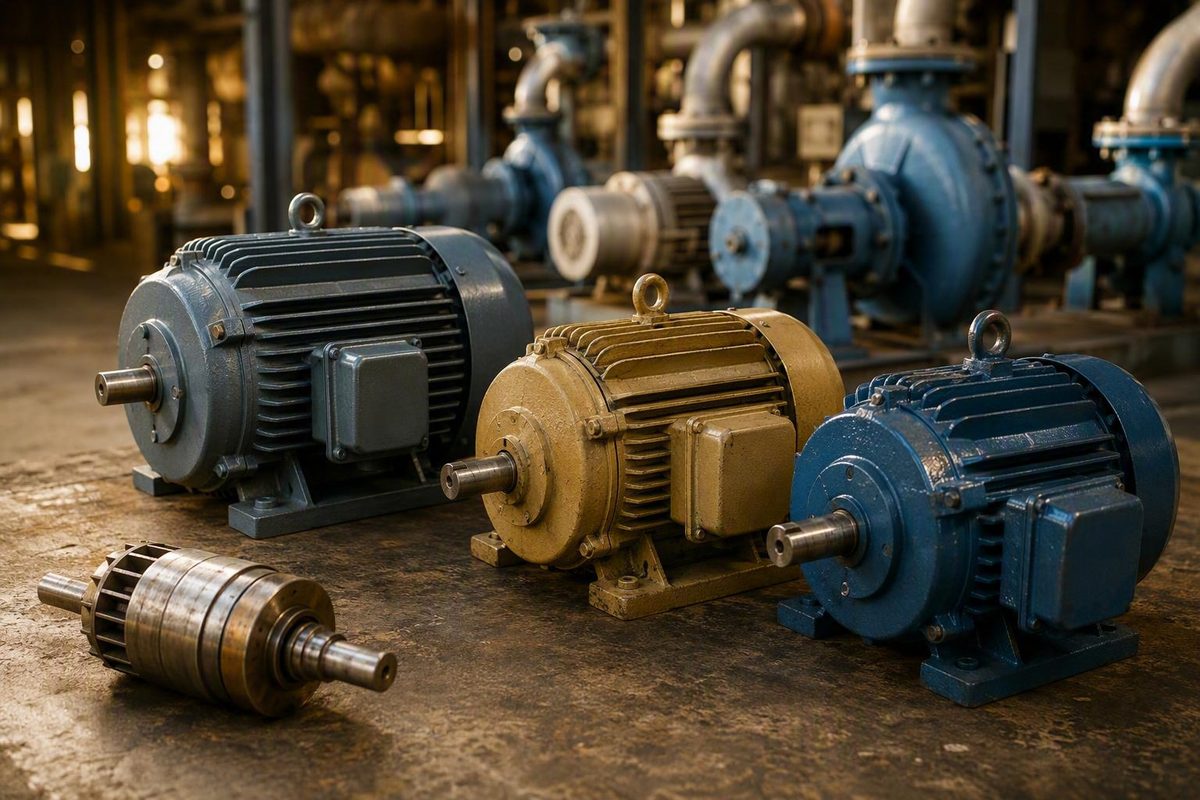
No supported universal or representative industry-average cost of motors per hp is available from the cited sources. For an industrial electric motor, cost per horsepower becomes meaningful only after speed, electrical characteristics, frame, construction, duty, and application have been matched.
This article covers industrial electric motors only. The figures do not apply to combustion engines, outboards, hydraulic motors, or other equipment also described as a “motor.”
A sound purchase comparison keeps three measures separate:
- Bare-motor cost per hp
- Installed project cost per hp
- Lifetime ownership cost, including estimated electricity use
A low equipment price per horsepower may look attractive, but it cannot make an electrically or mechanically incompatible motor a good purchase.
The short answer: observed motor prices per hp vary widely
A limited equipment-only snapshot shows how widely calculated prices can vary:
- Selected 1.5 hp motors calculate to approximately $339 to $960 per hp.
- One 50 hp motor calculates to $67.62 per hp.
- Two 100 hp crusher-duty motors calculate to $78.09 and $111.68 per hp.
These calculations use displayed, undated retailer asking prices for specific, unlike products. They are not market averages, confirmed transaction prices, or directly comparable bids. The listings differ in speed, frame, construction, efficiency features, and intended application. The retailer also advertises free shipping on the displayed listings, but that does not establish what a future quotation will include. The cited motor catalog provides the underlying specifications and asking prices.
| Selected listing | Displayed equipment price | Calculated price per hp |
|---|---|---|
| 1.5 hp, 3600 RPM, 143JM close-coupled | $508.99 | $339.33 |
| 1.5 hp, 1200 RPM, 182TC stainless steel | $1,439.99 | $959.99 |
| 50 hp, 3600 RPM, 326TS, three-phase | $3,380.99 | $67.62 |
| 100 hp, 1800 RPM, 405T crusher motor | $7,808.99 | $78.09 |
| 100 hp, 1200 RPM, 444T crusher motor | $11,167.99 | $111.68 |
The examples help explain why a buyer may encounter a much higher price per hp on a smaller unit, but they do not establish a universal relationship between motor size and normalized cost. It would be wrong to conclude that every small motor costs more per hp than every large motor. Specialized construction can materially affect either size category.
Treat these figures as calculation examples, not as a budget schedule. A usable budget requires current quotations for motors that satisfy the same technical specification and commercial scope.
How to calculate purchase cost per horsepower
The basic calculation is:
Purchase cost per hp = quoted motor price ÷ rated horsepower
For the listed 50 hp example:
$3,380.99 ÷ 50 hp = $67.6198 per hp
Rounded to the nearest cent:
$67.62 per hp
The arithmetic is straightforward. Defining “quoted motor price” correctly is harder. Before using the formula, determine whether the numerator represents the motor alone or includes freight, controls, accessories, taxes, or another part of the project.
A specification-aware comparison makes the differences visible:
| Displayed price | Rated hp | Calculated price per hp | RPM | Frame | Construction or application | Comparability notes |
|---|---|---|---|---|---|---|
| $508.99 | 1.5 | $339.33 | 3600 | 143JM | Close-coupled | Application-specific frame and coupling arrangement |
| $583.99 | 1.5 | $389.33 | 1800 | 145T | Premium-efficiency, three-phase | Different speed and efficiency designation |
| $889.99 | 1.5 | $593.33 | 3600 | 143TC | Stainless steel | Material and washdown-oriented features differ |
| $1,439.99 | 1.5 | $959.99 | 1200 | 182TC | Stainless steel | Different speed, frame, and construction |
| $3,380.99 | 50 | $67.62 | 3600 | 326TS | Three-phase | Different power band; not comparable with 1.5 hp units |
| $7,808.99 | 100 | $78.09 | 1800 | 405T | Crusher motor | Application-specific construction |
| $11,167.99 | 100 | $111.68 | 1200 | 444T | Crusher motor | Different speed and frame from the other 100 hp unit |
Table note: Prices and specifications are from the retailer’s undated displayed listings; the cost-per-hp amounts are arithmetic calculations from those figures. They are asking prices for unlike products, not comparable transaction quotes. Review the catalog listings.
Representative calculations are:
- $508.99 ÷ 1.5 hp = $339.33 per hp
- $1,439.99 ÷ 1.5 hp = $959.99 per hp, after rounding
- $7,808.99 ÷ 100 hp = $78.09 per hp
- $11,167.99 ÷ 100 hp = $111.68 per hp
A calculator can produce these results to several decimal places, but arithmetic precision does not make unlike motors comparable. A 1200 RPM stainless-steel motor and a 3600 RPM close-coupled motor are not substitutes merely because both nameplates say 1.5 hp.
Use this sequence:
- Establish the driven equipment’s requirements.
- Remove motors that do not meet those requirements.
- Normalize what each remaining quotation includes.
- Divide each comparable motor price by rated hp.
- Compare installation and operating costs separately.
Price per hp belongs near the end of technical screening—not at the beginning.
Why motors with the same horsepower can have different prices
Horsepower states rated mechanical output. It does not establish whether a motor has the correct speed, starting behavior, electrical supply, shaft and mounting geometry, environmental protection, material, or operating duty.
The selected 1.5 hp listings demonstrate this distinction. Their displayed prices range from $508.99 to $1,439.99 even though the rated horsepower is identical. Visible differences include:
- 1200, 1800, or 3600 RPM
- Frames such as 56C, 143JM, 143TC, 145JP, 145T, and 182TC
- Stainless-steel versus other construction
- Premium-efficiency designation
- Three-phase design
- Close-coupled and other application-specific configurations
These are not merely cosmetic labels. They help determine whether the motor can connect to the load, operate from the available power supply, withstand the environment, and drive the equipment at the required speed.
Speed and driven-equipment performance
Motor RPM affects the driven machine directly. On a pump, fan, conveyor, or crusher, changing motor speed can alter process performance or make the selection unusable. A low cost per hp cannot compensate for the wrong speed.
For pump service in particular, motor speed must suit the pump and system requirements. Buyers should not treat the replacement motor as an isolated component.
Voltage and phase
The available electrical service must match the motor and its control arrangement. A three-phase motor is not a drop-in replacement where an appropriate three-phase supply or conversion arrangement is unavailable. Voltage must also be checked rather than inferred from horsepower.
Controls matter as well. A motor intended for direct starting may create different project requirements from one operated through a variable-frequency drive.
Frame and mounting arrangement
Frame designations communicate important dimensional relationships. Shaft height, shaft diameter, bolt pattern, flange, and close-coupled geometry can determine whether a motor physically fits the existing machine.
An inexpensive motor that requires a base redesign, coupling change, or driven-equipment modification may become the more expensive option after installation.
Enclosure, construction, and environment
A general-purpose motor and a stainless-steel or washdown-oriented motor address different operating conditions. The environment may call for protection against water, dust, corrosion, or other exposure.
Specify the required enclosure and construction before comparing prices. Otherwise, cost per hp may reward a product that cannot survive the intended service.
Efficiency and duty
Two motors with the same rated hp can require different electrical input to produce the same mechanical output. Efficiency, duty, service factor, starting requirements, and performance at the expected load can all affect suitability and operating cost.
These attributes should be considered alongside speed, enclosure, annual operating hours, installation consequences, and the needs of the driven equipment. Horsepower is only one part of the specification.
Because the listed products differ in several ways at once, they cannot establish a dependable dollar or percentage premium for stainless steel, lower speed, premium efficiency, a particular frame, or any other individual attribute. Determining such a premium would require controlled, like-for-like quotations.
The practical conclusion is simple: the lowest cost-per-hp option may be impossible to use. Electrical supply, speed, frame, construction, and application fit are pass-or-fail requirements—not optional adjustments to a price score.
Bare-motor, installed, and lifetime cost per hp are different numbers
“Cost per horsepower” becomes ambiguous unless the cost boundary is stated. A purchasing comparison should distinguish at least three measures.
Bare-motor cost per hp
Bare-motor cost per hp = motor equipment price ÷ nameplate hp
This is the measure used for the retailer examples. It can help screen technically comparable equipment quotations.
It should not be called “installed cost” unless the quotation genuinely covers the complete installation. Likewise, an advertised shipping offer should not be treated as proof that freight, delivery conditions, or all project logistics are included in a future order.
Installed cost per hp
Installed cost per hp = complete installed project cost ÷ nameplate hp
The complete project may include substantially more than the motor. Depending on the job and the supplier’s scope, confirm the treatment of:
- Freight
- Sales or use taxes
- Starter or variable-frequency drive
- Disconnects, protection, and controls
- Sensors and other accessories
- Mounting hardware and base modifications
- Couplings
- Electrical cable, conduit, terminations, and labor
- Rigging and mechanical labor
- Shaft alignment
- Foundation work
- Testing and commissioning
- Removal and disposal of the old unit
- Production downtime
The available evidence does not support a typical installed-cost-per-hp benchmark. These costs vary with motor size, site conditions, controls, electrical infrastructure, mechanical scope, and the degree to which the new motor matches the existing installation.
A replacement matching the existing frame, voltage, speed, and controls may be relatively direct. A nominally cheaper motor that forces changes to the base, coupling, wiring, or control equipment can produce a higher installed total.
Lifetime ownership cost
A useful simplified definition is:
Lifetime cost = acquisition + installation + estimated energy + other stated ownership costs over a defined period
Other ownership costs may include planned maintenance, repairs, replacement parts, condition monitoring, removal, replacement, and the financial consequences of downtime. Include only categories that can be estimated credibly, and display uncertain costs separately rather than hiding them inside a precise-looking total.
One commercial comparison calculator combines entered purchase prices with estimated electricity use over a selected period. It explicitly excludes future repair and parts costs, so its output is better understood as a purchase-plus-energy estimate than as a complete prediction of ownership cost. The calculator identifies its inputs, outputs, and repair-cost exclusion.
A well-labeled comparison can use these categories:
| Cost measure | Formula | What it should include |
|---|---|---|
| Bare-motor cost per hp | Motor equipment price ÷ hp | Only the quoted motor and expressly included accessories |
| Installed cost per hp | Complete installed project cost ÷ hp | Motor plus verified project costs |
| Annual electricity cost | Estimated annual kWh × applicable $/kWh | Energy charge under stated load and runtime assumptions |
| Selected-period ownership cost | Acquisition + installation + energy + stated ownership costs | Only categories explicitly modeled for the selected period |
Every pricing table or comparison should identify:
- Source and date obtained
- Motor specifications
- Whether the amount is equipment-only
- Included accessories and services
- Freight and tax treatment
- Installation boundary
- Excluded costs
- Quote expiration, if applicable
Without those notes, two figures labeled “cost per hp” may describe entirely different commercial scopes.
Calculate the electricity cost of each horsepower
One mechanical horsepower is approximately 0.746 kilowatts of mechanical output. Because motor efficiency is below 100%, the electrical input required to produce that output is higher.
For a simplified estimate:
Annual kWh = hp × 0.746 × load factor ÷ efficiency × annual operating hours
Then calculate cost:
Annual electricity cost = annual kWh × applicable electricity price per kWh
Enter load factor and efficiency as decimals. For example, enter 95% efficiency as 0.95 and 75% load as 0.75. The conversion and annual-energy method are reflected in the government-hosted motor-purchasing fact sheet.
Editable cost-per-hp and annual-energy calculator
Enter the application-specific values below rather than relying on a universal operating-cost estimate.
| Input | Your value | Entry guidance |
|---|---|---|
| Rated horsepower | ___ hp | Use motor nameplate hp |
| Motor equipment price | $___ | State what the quotation includes |
| Estimated load factor | ___ | Decimal; for example, 75% = 0.75 |
| Efficiency at relevant load | ___ | Decimal; use applicable performance data |
| Operating hours per day | ___ | Use a realistic operating schedule |
| Operating days per year | ___ | Account for seasonal or planned shutdowns |
| Annual operating hours | ___ hours | Hours/day × days/year |
| Applicable energy rate | $___/kWh | Use the rate relevant to the facility and period |
| Bare-motor cost per hp | $___/hp | Motor price ÷ rated hp |
| Annual kWh | ___ | hp × 0.746 × load ÷ efficiency × annual hours |
| Annual energy cost | $___ | Annual kWh × $/kWh |
For Motor A:
Bare-motor cost per hp =
    quoted motor price ÷ rated horsepower

Annual operating hours =
    hours per day × operating days per year

Annual kWh =
    rated hp × 0.746 × estimated load factor
    ÷ efficiency at that load
    × annual operating hours

Annual electricity cost =
    annual kWh × applicable electricity rate
Repeat the calculation for Motor B using the same operating duty when the two motors are genuine alternatives.
Do not assume full-load efficiency at every operating point
Published nominal full-load efficiency is not automatically the correct value at every load. If the driven machine usually runs at part load, use manufacturer performance data or other appropriate engineering information for that operating point where available.
Likewise, do not assume the motor delivers nameplate horsepower during every running hour. Load factor represents the estimated fraction of rated output actually required. Runtime should reflect real production schedules, seasonal use, standby operation, and planned shutdowns.
The simple formula does not model every tariff
Multiplying annual kWh by a single energy rate is useful for an initial estimate, but an electricity bill may contain other elements, including:
- Demand charges
- Time-of-use rates
- Seasonal rates
- Power-factor provisions
- Minimum billing terms
- Taxes and riders
A motor change may affect peak demand differently from annual energy consumption. When those charges are material, use the applicable utility tariff and facility demand profile rather than relying only on a blended energy rate.
Historical examples often use low electricity prices to demonstrate the calculation method. Those rates are not current benchmarks. Use the applicable tariff or a defensible recent average derived from the facility’s bills.
When a higher-priced efficient motor can be cheaper overall
A more efficient motor can justify a higher purchase price, but an efficiency designation does not guarantee a favorable payback in every application. The result depends on:
- Upfront price premium
- Difference in efficiency at the relevant load
- Actual load factor
- Annual operating hours
- Electricity tariff
- Expected service life
- Verified incentives or rebates
- Installation differences
- Buyer’s required payback period
- Maintenance, reliability, and downtime considerations
High runtime and high electricity prices increase the potential value of an efficiency improvement. Low runtime reduces the annual savings available to recover the initial premium.
A 600 hp illustration—and its limitations
A manufacturer-affiliated trade-publication example compares a 600 hp standard-efficiency motor priced at $40,000 with a super-premium-efficiency motor priced at $55,000. Those figures equal approximately $66.67 per hp and $91.67 per hp. The higher-efficiency option adds $15,000, or $25 per hp, upfront. The Pumps & Systems example provides the prices and operating assumptions.
This is an illustration written by an author affiliated with ABB, not a general motor-market benchmark. Its assumptions should be examined rather than transferred directly into a budget.
The example also contains inconsistencies:
- The $55,000 price is 37.5% above the $40,000 price.
- The article separately describes an efficient-motor acquisition premium of 15% to 25%.
- Those two statements do not agree.
- Using the standard mechanical conversion, 600 hp × 0.746 = 447.6 kW, or approximately 448 kW.
- That result is consistent with the source’s energy formulas, rather than its separate 478 kW statement. These figures appear within the same manufacturer-affiliated illustration.
The useful lesson is not that a 600 hp efficient motor should cost $55,000 or repay its premium on a universal schedule. The lesson is that a transparent comparison can test whether expected energy savings exceed the additional acquisition cost under defined assumptions.
Calculate annual savings and simple payback
For two motors delivering the same required output under the same duty:
Annual energy-cost savings = Motor A annual electricity cost − Motor B annual electricity cost
Then:
Simple payback = net price premium after any verified rebate ÷ annual energy-cost savings
Where:
Net price premium = higher-efficiency installed price − baseline installed price − verified rebate
Use installed prices when the alternatives create different installation costs. If installation is identical and only motor acquisition differs, the bare-motor price difference may be adequate for an initial screen.
Simple payback does not capture financing, discount rates, future electricity-price changes, maintenance differences, residual value, or downtime. It is a screening method, not a complete capital model.
What the historical 50 hp example demonstrates
Historical government-hosted guidance presents a 50 hp motor operating at 75% load with electricity priced at $0.04/kWh. Under its stated assumptions, a one-percentage-point efficiency improvement saves 4,079 kWh per year, valued at $163 annually. The same dated guidance reported distributor discounts of 20% to 60%, depending on quantity, motor type, market conditions, and distributor policy. These figures explain historical calculation and purchasing methods; they must not be presented as current energy prices, regulatory requirements, or distributor practices. See the historical motor-purchasing fact sheet.
Applying the same 4,079 kWh saving to a buyer’s actual energy charge would produce a different dollar result. Different operating hours, loads, or efficiencies would also change the energy saving.
No universal one- or two-year payback claim is supportable. A short payback may occur in a high-runtime, high-rate application with a meaningful efficiency gain and a modest premium. A lightly used motor with a large premium may not meet the buyer’s target during its expected service period.
A like-for-like motor quote checklist
Cost per hp is meaningful only when quotations describe motors that can perform the same job. Send every supplier the same specification and ask each bidder to identify deviations explicitly.
Technical specification
Confirm:
- [ ] Rated horsepower
- [ ] RPM or number of poles
- [ ] Voltage
- [ ] Phase
- [ ] Frequency
- [ ] Frame
- [ ] Enclosure
- [ ] Efficiency class
- [ ] Stated nominal efficiency
- [ ] Efficiency at the expected operating load, if available
- [ ] Duty rating
- [ ] Service factor
- [ ] Starting and torque requirements
- [ ] Mounting arrangement
- [ ] Shaft, flange, and coupling requirements
- [ ] Construction material
- [ ] Environmental requirements
- [ ] Inverter-duty requirements, where applicable
- [ ] Driven application
- [ ] Warranty
- [ ] Quantity
For pump service, confirm that speed and mechanical fit suit the pump and system. Do not evaluate the motor independently of the driven equipment.
Commercial scope
Ask each bidder to state:
- [ ] Motor equipment price
- [ ] Included accessories
- [ ] Starter included or excluded
- [ ] VFD included or excluded
- [ ] Controls and protection included or excluded
- [ ] Freight terms
- [ ] Taxes
- [ ] Delivery time
- [ ] Quote expiration
- [ ] Commissioning included or excluded
- [ ] Installation included or excluded
- [ ] Removal and disposal included or excluded
- [ ] Quantity discount, if any
- [ ] Rebate treatment, if any
Displayed online prices and list prices can help with early investigation, but they are not substitutes for actual distributor quotations. Request written pricing rather than assuming that the displayed amount will be the final transaction price.
Compare in the right sequence
Use a consistent decision process:
- Confirm technical fit. Remove any motor that fails the electrical, mechanical, environmental, or duty requirements.
- Normalize quote inclusions. Put freight, taxes, accessories, controls, and installation on the same basis.
- Calculate bare-motor cost per hp. Divide the normalized motor-only price by rated hp.
- Estimate annual electricity cost. Use actual load, relevant efficiency, operating hours, and tariff assumptions.
- Calculate payback where relevant. Compare the net premium with estimated annual energy savings.
- Assess maintenance and downtime separately. Do not invent a precise dollar allowance without site evidence.
- Document uncertainty. Record which values are quoted, measured, estimated, or excluded.
When buying multiple motors, do not automatically multiply the saving from one calculation across every unit. Scale the estimate only when the motors have comparable duty, load, efficiency, operating hours, and electricity tariffs. Motors with identical nameplates can still have different operating profiles.
How to use cost per hp without making a bad motor selection
Cost per hp is a screening metric, not a motor-selection rule. Use it only after the remaining alternatives satisfy the same functional and electrical requirements.
It can be useful for:
- Comparing current motor-only quotations for the same specification
- Spotting an unusually high or low quotation that deserves investigation
- Normalizing acquisition cost across equal-hp alternatives
- Communicating an early capital estimate when its limits are stated
- Tracking quote changes over time for a tightly defined motor class
It is misleading when used to compare:
- General-purpose and stainless-steel motors
- Standard and close-coupled pump motors
- Different RPM ratings
- Different frames or mounting arrangements
- Different voltage or phase requirements
- General-purpose and crusher-duty motors
- Equipment-only prices and installed project prices
- Asking prices and negotiated transaction quotations
Do not collapse every expense into one unlabeled “cost per hp” number. Use separate columns:
| Alternative | Acquisition cost | Installed cost | Annual electricity cost | Ownership cost over selected period |
|---|---|---|---|---|
| Motor A | $___ | $___ | $___/year | $___ over ___ years |
| Motor B | $___ | $___ | $___/year | $___ over ___ years |
The acquisition column answers, “What does the motor cost?” The installed column answers, “What will it take to put this option into service?” The energy column answers, “What might it cost to operate each year under the stated assumptions?” The ownership column combines only the categories explicitly included over a defined period.
Runtime changes the importance of each column. In a high-use application, an efficiency difference can accumulate over many operating hours. In a low-use or standby application, acquisition cost may carry more weight because fewer energy-saving hours are available. These are qualitative principles; the actual decision requires site-specific numbers.
The retailer examples demonstrate both the usefulness and the limitation of the metric. They show that dividing price by horsepower is easy, while deciding whether the resulting figures are comparable is not. The cited snapshot consists of equipment-only calculations from displayed, undated asking prices for unlike motors—not market averages or final bids.
The decision rule is:
Select for technical fit first, normalize costs second, and use current quotations plus application-specific operating assumptions before approving the purchase.
Verify fit first, divide price by hp second, and evaluate installation and operating assumptions before deciding which motor is actually less expensive.
Frequently asked questions
What is a typical cost per hp for an electric motor?
The cited evidence does not support a universal or representative industry-average cost per hp for an industrial electric motor. The retailer snapshot above shows a wide range, but those values come from undated asking prices for unlike products rather than confirmed transactions or comparable bids.
For a meaningful figure, obtain current quotations for motors matched on horsepower, RPM, voltage, phase, frame, enclosure, efficiency, duty, mounting, application, and commercial scope.
Does motor cost per hp decrease as horsepower increases?
It may decrease in some product comparisons, but the limited listings do not establish a universal size curve. Construction, speed, frame, enclosure, efficiency, and application can outweigh any apparent size effect.
Do not assume every larger motor will have a lower cost per hp. Compare a sufficiently narrow class of technically equivalent motors using current quotations.
How do I calculate the annual electricity cost of a motor?
Use:
Annual kWh = hp × 0.746 × load factor ÷ efficiency × annual operating hours
Then:
Annual electricity cost = annual kWh × applicable electricity price per kWh
Enter load and efficiency as decimals. Use efficiency at the relevant operating load where available rather than automatically using the full-load figure. If the tariff includes demand or time-based charges, model those separately because the simplified formula captures only kWh multiplied by an energy rate.
When will a premium-efficiency motor recover its higher purchase price?
Calculate:
Simple payback = net price premium after verified rebates ÷ annual energy-cost savings
Annual savings depend on the efficiency difference, actual load, annual operating hours, and electricity rate. Installation differences may also change the effective premium.
There is no universal one- or two-year answer. Use the actual application assumptions, then compare the result with the buyer’s required payback period and the motor’s expected service life.
Does an online motor price include a VFD, freight, and installation?
Do not assume it does. An online listing may represent only the motor, even if the page separately promotes shipping terms. It may exclude a VFD, starter, controls, taxes, accessories, mounting work, electrical labor, alignment, commissioning, and downtime.
Ask for a written quotation identifying every inclusion and exclusion. Calculate bare-motor cost per hp from the equipment price, installed cost per hp from the complete project price, and lifetime cost from separately stated acquisition, installation, energy, and ownership assumptions.